Bringing Nature to the Page: A Guide to the Bloem Wildflower Font
There is a specific challenge in design that every creative faces eventually: the need for a font that feels genuinely organic. We often find ourselves scrolling through endless libraries of serif font and sans serif font options that look too digital, too rigid, or too perfect. When you are working on a project that requires a touch of earthiness—something that feels like it was grown rather than generated—the Bloem typeface enters the conversation. It is not merely a set of characters; it is a display font designed to function as a botanical illustration tool, offering a distinct aesthetic that standard script font or handwritten font options struggle to replicate.
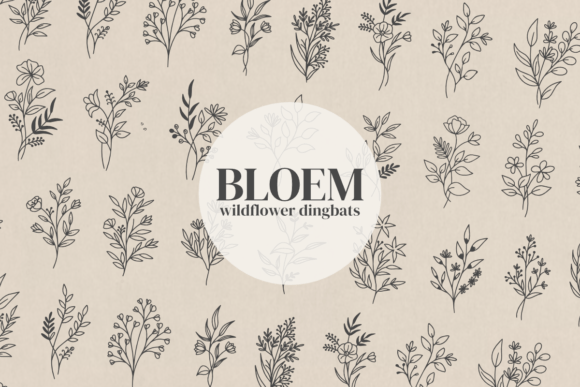
At its core, Bloem is a collection of wildflower dingbats. However, labeling it simply as "dingbats" undersells its utility. In the world of modern typography, we often use symbols to break up text, create visual interest, or establish a mood without relying on photography. Bloem provides a library of floral illustrations that feel sketched and authentic. The visual style is intricate but not cluttered. It balances line weight and negative space to create shapes that are recognizable as wildflowers, herbs, and botanical clusters. The personality of this font is whimsical yet sophisticated. It avoids the cartoonish look of many novelty fonts, leaning instead toward a naturalist’s sketchbook aesthetic. This makes it an incredibly versatile creative font for projects that need to convey authenticity, nature, or a vintage botanical vibe.
Where Bloem Fits into Your Creative Workflow
Understanding where a premium font like this works best is about matching the tool to the task. Because Bloem is a display-oriented asset, it is not designed for body copy in a novel or a technical manual. Its strength lies in impact and decoration. If you are a small business owner or a graphic designer, you will find Bloem becomes a staple in your design assets folder when specific projects arise.
Consider the realm of brand identity. For businesses in the wellness, organic food, floristry, or sustainable fashion sectors, visual branding needs to communicate values of purity and nature. Using Bloem allows you to integrate floral elements directly into your typography. You can use individual flower glyphs to create a custom border for a business card or use a cluster of them to create a unique logo mark. Unlike generic clip art, these elements have the consistency of a cohesive typeface, ensuring that your visual language remains uniform across different applications.
In editorial design and packaging design, the font shines as a tool for visual hierarchy. Imagine a magazine layout focusing on spring gardening or a book cover for a romance novel. Bloem can be used for drop caps—large initials at the start of a chapter—or to create decorative dividers between text sections. For packaging, particularly in the cosmetic or food industries, these botanical illustrations can wrap around a box or jar, creating a pattern that looks bespoke rather than stock.
Practical Application: From Digital Screens to Printed Mugs
The versatility of this typeface extends heavily into the digital space. Social media graphics require constant content generation, and standing out in a crowded feed is difficult. Bloem offers a solution for creating "stop the scroll" imagery. A content creator or blogger can use a single large flower glyph as a background element for an Instagram quote or use them to frame a text box in a Pinterest pin. Because the illustrations are vector-based, they scale perfectly, maintaining crisp edges whether viewed on a mobile phone or a desktop monitor.
However, the utility of Bloem is perhaps most tactile in the realm of physical products. For crafters and hobbyists involved in DIY projects, this font is a gateway to professional-looking stationery. You can use it to create intricate details for wedding invitations, seating charts, or thank you cards. The floral motifs pair exceptionally well with textured paper stocks, giving the final product a high-end, artisanal feel. Furthermore, for those selling on platforms like Etsy, Bloem is invaluable for creating designs to be printed on mugs, tote bags, and t-shirts. A simple monogram surrounded by a few Bloem flowers instantly elevates a basic product into something giftable and charming.
Strategic Pairing and Readability
When incorporating a creative font like Bloem into a layout, the most critical skill is font pairing. Because Bloem is highly detailed and stylistic, it demands a partner that is quiet and structured. If you pair these botanical illustrations with a busy, decorative script, the result will be visual chaos. Instead, look to pair Bloem with a clean, geometric sans serif font or a classic, sturdy serif font.
For example, if you are designing a logo for an organic skincare line, you might use a sans serif font like Montserrat or Lato for the brand name. Then, you could use Bloem to create a wreath around the text or place a specific floral dingbat to dot an 'i' or cross a 't' (if the letter spacing allows for it). This contrast creates a visual hierarchy: the clean text provides readability, while the Bloem illustrations provide the personality.
Readability is a key consideration here. Since these are decorative elements, they should generally be used as accents rather than as the primary method of conveying information. In web design, for instance, you might use Bloem as a decorative header background or an icon replacement, but you would not use it for navigation menus. The goal is to guide the eye and evoke a feeling, not to force the reader to decipher complex shapes for basic information.
Evaluating Fit and Licensing
Before downloading any premium font, it is wise to evaluate the specific glyphs included to ensure they fit your project's narrative. Bloem focuses on wildflowers, so it is perfect for spring and summer campaigns, nature themes, and rustic aesthetics. It might be less suitable for a corporate finance report or a futuristic tech startup. Always look at the full character map of a commercial font to see if the variety of illustrations covers your needs—do you need roses, daisies, or generic leaf clusters?
Finally, the practical matter of licensing cannot be ignored. If you are a marketer or entrepreneur using this font for client work or merchandise, you must ensure you have the appropriate commercial license. Most font foundries offer different tiers: one for desktop use (creating logos and printables) and one for web use (embedding the font in a site's code). Since Bloem is often used for products like mugs and shirts, verify that your license permits "print on demand" or merchandise creation. Respecting these boundaries not only protects your business legally but supports the type designers who create these beautiful design assets.
In summary, Bloem is more than just a collection of flowers. It is a specialized tool for adding warmth, nature, and an artisanal touch to modern design. Whether you are refreshing a brand identity, designing a wedding suite, or creating merchandise, its botanical charm offers a timeless way to connect with your audience visually.